
REPRODUCTIVE RIGHTS

Reproductive rights are legal rights and freedoms relating to reproduction and reproductive health. The World Health Organization defines reproductive rights as follows: Reproductive rights rest on the recognition of the basic right of all couples and individuals to decide freely ...

Read More

LEGAL PLURALISM

Legal pluralism is a concept developed by legal sociologists and social anthropologists "to describe multiple layers of law, usually with different sources of legitimacy, that exist within a single state or society". It is also defined "as a situation in ...

Read More

SOCIOLOGICAL VERSUS JURISPRUDENTIAL PERSPECTIVES ON LAW

The discipline of sociology does not hold a monopoly on efforts to unveil the connections between law and society. In the twentieth century, Roscoe Pound, Jerome Frank, and other legal scholars abandoned legal formalism and created new ways to understand the ...

Read More

THE SOCIOLOGY OF LAW

The sociology of law refers to the sociological study of law and law-related phenomena, whereby law is typically conceived as the whole of legal norms in society as well as the practices and institutions that are associated with those norms. ...

Read More

COMMUNITARIANISM AND SOCIETY

Communitarianism is a philosophy that emphasizes the connection between the individual and the community. Although the community might be a family unit, communitarianism usually is understood, in the wider, philosophical sense, as a collection of interactions, among a community of ...

Read More

PERSONALITY DISORDER

personality disorder is a type of mental disorder in which you have a rigid and unhealthy pattern of thinking, functioning and behaving. A person with a personality disorder has trouble perceiving and relating to situations and people. This causes significant ...

Read More

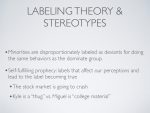
LABELING THEORY

LABELING THEORY LABELING THEORY Labeling theory, in criminology, a theory stemming out of a sociological perspective known as “symbolic interactionism,” a school of thought based on the ideas of George Herbert Mead, John Dewey, W. I. Thomas, Charles Horton Cooley, and Herbert Blumer, among others. The first as ...

Read More

TECHNIQUES OF NEUTRALIZATION

Matza argued that instead of crime being a feature of deviant values shared in criminal subcultures, in fact we all had so-called "subterranean values" that, for the most part, we managed to control and inhibit.  He argued that criminals use ...

Read More

DIFFERENTIAL ASSOCIATION THEORY

Differential Association theory is a criminology theory that looks at the acts of the criminal as learned behaviors. Edwin H. Sutherland is credited with the development of the Differential Association theory in 1939. Sutherland, a sociologist and professor most of ...

Read More

LAWS AGAINST CYBERBULLYING

Cyberbullying is the use of information technology to repeatedly harm or harass other people in a deliberate manner. According to U.S. Legal Definitions, "cyber-bullying could be limited to posting rumors or gossips about a person in the internet bringing about ...

Read More